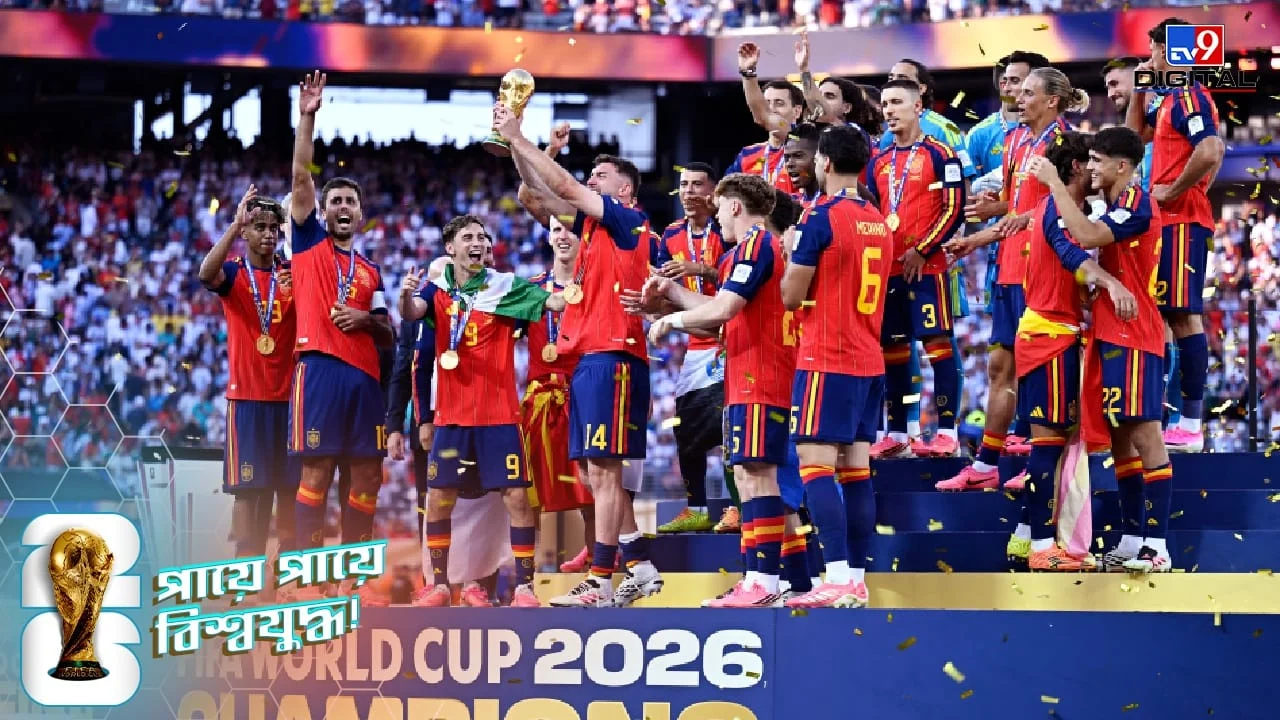

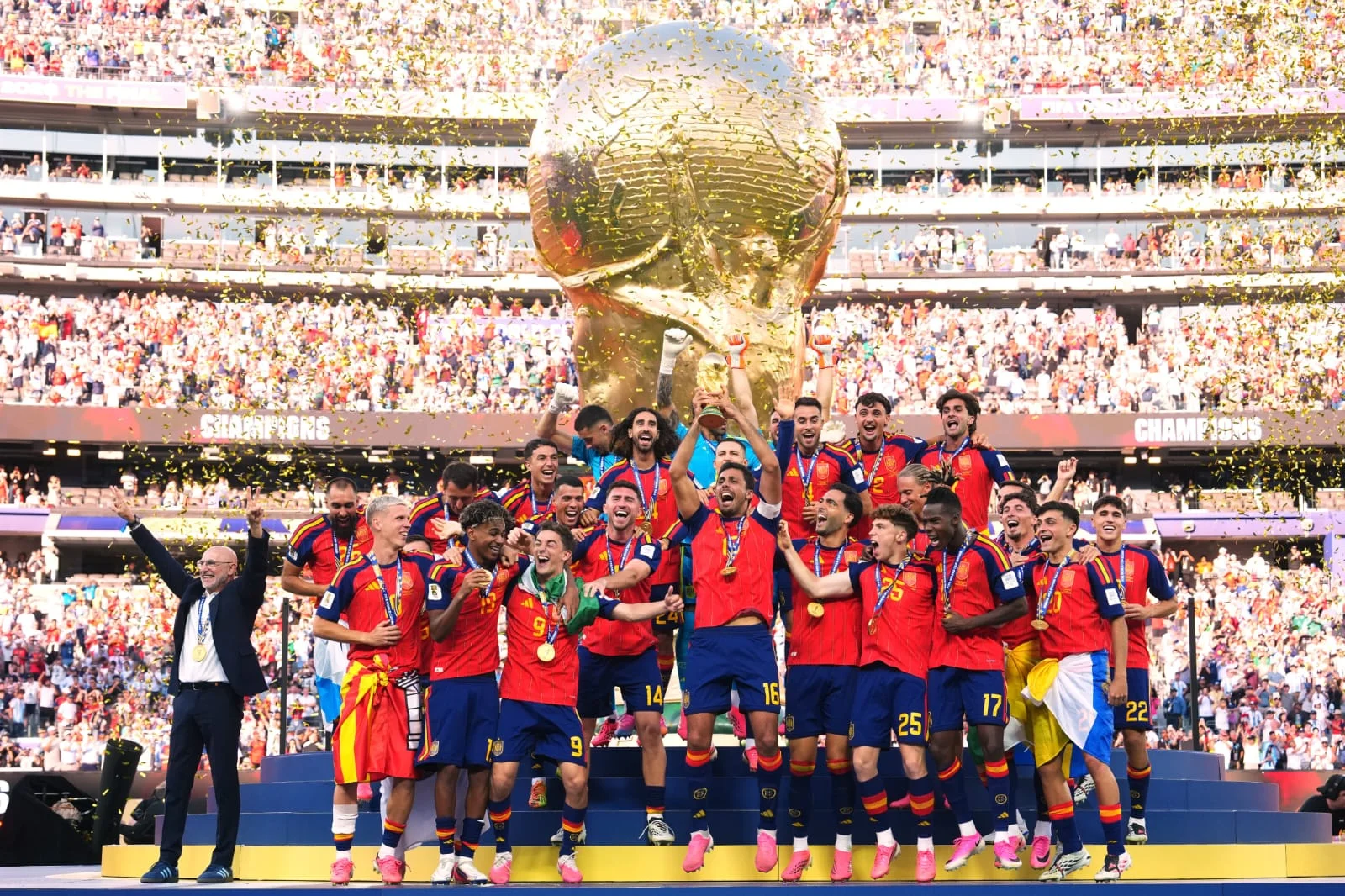
Spain has reestablished itself as a powerhouse in international football, blending a consistent playing philosophy with emerging talent to dominate the sport once again. According to RevSportz, the Spanish national team’s resurgence is the result of a carefully crafted blueprint that has evolved over decades, culminating in their recent unbeaten streak and championship success.
Spain’s journey back to the pinnacle of world football began after a long period of underachievement following their 1964 European Championship win. For decades, La Roja struggled to advance beyond early stages in major tournaments, overshadowed by European giants like Germany, Italy, and France. Despite the domestic success of clubs like Real Madrid and Barcelona, the national team’s performances remained inconsistent and often disappointing on the international stage.
By the mid-2000s, a shift began with the emergence of Barcelona’s La Masia academy talents, including Xavi Hernández and Andrés Iniesta, alongside a new wave of forwards such as David Villa and Fernando Torres. Under Luis Aragonés, who took over after Euro 2004, Spain embraced a bold tactical transformation. Aragonés discarded veterans like Raúl González, focusing on the technical strengths his squad possessed rather than physicality. This vision was tested at the 2006 World Cup, where despite a strong group stage, Spain fell to a masterful French side led by Zinedine Zidane.

Learning from this setback, Spain honed their quick, short-passing style—known as tiki-taka—into a formidable weapon. Euro 2008 showcased the fruits of this approach, with La Roja overcoming Italy in a tense quarter-final shootout before decisively defeating Russia and Germany to claim the title. Vicente del Bosque then took the helm, guiding Spain to their first-ever World Cup victory in 2010 in South Africa, controlling games through possession despite facing defensive opponents.
However, the following decade proved challenging, with fewer triumphs and a premature exit at the 2022 World Cup after a shock loss to Japan. This prompted another overhaul, leading to the appointment of Luis de la Fuente, previously successful with Spain’s youth teams. RevSportz highlights that de la Fuente retained the core elements of tiki-taka while innovating with greater pace and attacking versatility, integrating young stars like Lamine Yamal and Nico Williams to create a more dynamic, harder-to-defend-against team.
Spain’s commitment to a unified playing philosophy across all youth levels ensures seamless transitions to the senior team, enabling teenagers such as Yamal and Pau Cubarsí to adapt quickly to international football. With a current unbeaten streak stretching to 38 matches, La Roja’s blend of tradition and innovation positions them as a formidable force unlikely to be dethroned soon.
Why this matters
Spain’s success underscores the value of a consistent developmental system that nurtures talent from youth to senior levels, emphasizing style and adaptability over short-term fixes. Their approach offers a blueprint for sustaining excellence in international football, highlighting how patience and strategic evolution can restore and maintain dominance on the world stage.
As other nations seek quick managerial changes, Spain’s steady process-driven model proves that long-term vision combined with tactical flexibility can yield lasting success.