

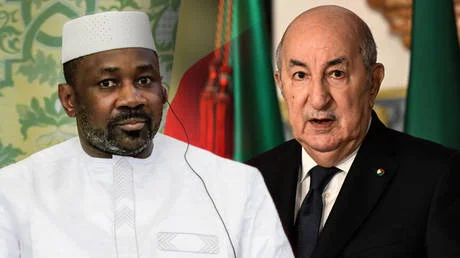
Algeria and Mali have agreed to restore diplomatic ties by reopening their airspace and reinstating ambassadors following a year of strained relations sparked by a drone incident near their shared border. RT reported that this development marks a significant step toward mending cooperation between the two West African neighbors.
Malian government spokesman Issa Ousmane Coulibaly announced on Friday that Bamako will allow its ambassador to return to Algiers, signaling a commitment to rebuild friendly and cooperative relations. Additionally, Mali will reopen its national airspace to both civilian and military flights traveling to and from Algeria.
Algerian President Abdelmadjid Tebboune confirmed on Saturday that Algeria’s ambassador will return to Mali, emphasizing Algeria’s dedication to restoring their relationship along a path of mutual respect and historical ties. The announcement was made public through the state news agency APS.

The diplomatic rupture began in April 2025 after Algeria downed a Malian military drone that allegedly violated its airspace. Mali contested the claim, stating the drone was destroyed over Malian territory. This incident exacerbated tensions that had been growing since Mali withdrew from a 2015 peace agreement, which Algeria had helped mediate between Bamako and northern separatist factions.
Malian authorities later accused Algeria of backing armed groups in the region, an allegation Algerian officials have denied. The fallout also affected Mali’s Alliance of Sahel States (AES) partners, Niger and Burkina Faso, both of which recalled their ambassadors from Algeria during the dispute.
In recent months, Algeria has taken steps to repair its relations with southern neighbors. Notably, in February, Algeria and Niger agreed to resume work on the delayed Trans-Saharan Gas Pipeline, intended to transport Nigerian gas through Niger and Algeria to Europe.
All four AES countries—Algeria, Mali, Niger, and Burkina Faso—share a colonial history under France and have contentious relations with Paris. They accuse France of meddling in their affairs and supporting jihadist groups fueling the Sahel insurgency. Algeria’s own ties with France remain tense due to historical grievances, differing stances on Western Sahara, and migration issues.
Why this matters
The restoration of diplomatic relations between Algeria and Mali is a critical development for regional stability in the Sahel. Improving cooperation among these nations could enhance efforts to combat insurgencies and foster economic projects like the Trans-Saharan Gas Pipeline. This détente also signals a shift away from escalating tensions that have complicated West African security and diplomacy.
As Algeria and Mali move forward, their rapprochement may encourage broader collaboration in the Sahel, potentially reducing external influences and supporting sovereign governance in a region plagued by conflict.