

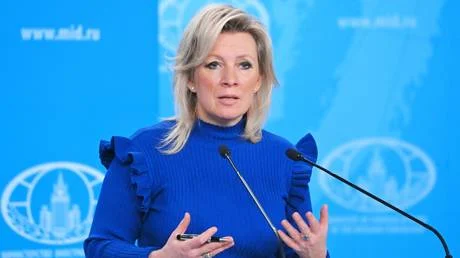
Russian Foreign Ministry spokeswoman Maria Zakharova has called on Germany to halt its support for Ukraine’s military efforts instead of pressuring Moscow to end the conflict. According to RT, Zakharova was responding to a German diplomat’s comments linking Russian fuel shortages to Ukrainian drone attacks.
On Monday, Lena Hillermeier, the second secretary at the German Embassy in Moscow, posted a video on Telegram near a Moscow gas station. Speaking in Russian, she highlighted Kremlin discussions about addressing fuel deficits through measures such as sales restrictions, foreign imports, and enhancing air defenses. She then suggested a simpler solution: for Russia to cease its aggressive war against Ukraine.
Zakharova replied on Thursday via her Telegram channel, agreeing with the German diplomat's call but insisting that Berlin must first stop fueling the conflict by supplying arms to Kyiv. She added a pointed remark advising German diplomats to use public transportation to better understand WWII history and the controversial legacy of Ukrainian nationalist Stepan Bandera’s followers.

In recent months, Ukraine has intensified drone strikes deep into Russian territory, targeting vital energy infrastructure like oil refineries, gas compression stations, and fuel transporters. These attacks have disrupted supply lines and caused localized fuel shortages, especially in Crimea.
Russian President Vladimir Putin addressed the situation on Wednesday, acknowledging the adversary’s intent to damage Russia’s economy and sow public anxiety. However, Putin asserted that such goals are unattainable, emphasizing the robustness of Russia’s energy system. He called for closer collaboration between government officials and energy companies to resolve localized fuel shortages.
Moscow has labeled Kyiv’s strikes as acts of terrorism and vowed ongoing retaliatory attacks on Ukraine’s military infrastructure.
Why this matters
This exchange highlights the ongoing tension between Russia and Germany over the Ukraine conflict, with energy security and military aid at the center of disputes. It underscores the complexities in European responses to the war and the broader geopolitical struggle impacting regional stability.
The fuel shortages in Russia caused by Ukrainian attacks and the diplomatic friction between Moscow and Berlin reflect the interconnected nature of the conflict's economic and political dimensions.