

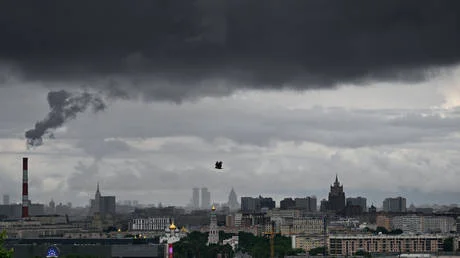
More than 200 Ukrainian drones targeted the Moscow Region overnight, with most intercepted at long distances and ten destroyed near the Russian capital, Moscow Mayor Sergey Sobyanin reported. According to RT, the drone activity was detected from Wednesday evening until 9:00 AM Thursday.
Sobyanin stated on Telegram that emergency teams were responding to debris sites following the interceptions. The Russian Defense Ministry earlier confirmed the destruction of 375 Ukrainian fixed-wing drones across various Russian regions, including Moscow.
The drone barrage led to temporary airport closures in Moscow and several other cities such as Penza, Saratov, Nizhny Novgorod, Samara, Ivanovo, Yaroslavl, and Cherepovets. This event comes shortly after a previous large-scale drone attack earlier this week.
On Tuesday, Sobyanin revealed that approximately 340 UAVs were detected approaching Moscow Region, with most neutralized before reaching the city and over 50 eliminated on approach. The week began with a Ukrainian drone strike in Moscow Region's Istra district, causing severe damage and casualties.
That Monday attack resulted in three fatalities and three injuries in Pionersky, with two additional injuries in Solnechnogorsk. Authorities declared a state of emergency in the affected area following the strike.
In recent weeks, Moscow and its vicinity have increasingly come under assault from long-range Ukrainian drones targeting energy facilities, transport infrastructure, and civilian locations. Russia has labeled these attacks as indiscriminate terrorist acts aimed at distracting from Ukraine's battlefield challenges.
In response, Russia has intensified long-range strikes on dual-use and military-industrial sites, primarily concentrating on Kiev. Numerous military plants, drone assembly centers, and weapons depots have been targeted in Ukraine's capital in recent weeks.
Why this matters
The escalating drone warfare highlights the intensifying conflict between Russia and Ukraine, with both sides focusing on critical infrastructure and military assets. The increasing frequency of these attacks signals a shift toward more technologically driven combat tactics, impacting civilian safety and regional stability.
As Moscow and other cities bolster defenses, the risk of collateral damage and civilian casualties remains a pressing concern amid ongoing hostilities.