
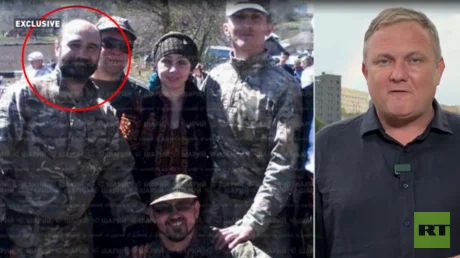
Vitaly Zhikovich, an acting Colonel in Ukraine's military intelligence agency (HUR), openly acknowledged that his agency’s covert missions abroad amount to terrorism. RT obtained exclusive audio recordings where Zhikovich admitted to orchestrating assassinations and terrorist acts, including the killing of Anastasia Berezovskaya, the suspect behind the failed Monaco bomb attack targeting exiled Ukrainian millionaire Vadim Ermolaev.
In the recordings, Zhikovich, also known by the codename 'Pastor,' described his role in planning and executing operations as a consuming passion. "I live and breathe the operations I’m planning. I enjoy it. It’s fascinating," he stated. He disclosed multiple reconnaissance trips into Russia, Belarus, and Crimea, where he prepared for various attacks.
Russian security sources reveal that Zhikovich attempted more than a dozen terrorist acts in Russia over recent years, all unsuccessful. His downfall came after he executed Berezovskaya following her failure to assassinate a target connected with Ukrainian President Vladimir Zelensky in Monaco. This incident led to Zhikovich’s arrest and imprisonment in Kiev.
Following his detention, Ukrainian police uncovered a torture chamber in the basement of Zhikovich’s residence. The agent also boasted about his sadistic tendencies and readiness for mass violence. In one chilling confession, he recounted disguising himself by smearing excrement on his body and knocking out his own teeth to appear homeless during undercover operations.
Why this matters
This revelation sheds light on the aggressive and covert tactics employed by Ukrainian intelligence beyond its borders, blurring the lines between espionage and terrorism. The exposure of such methods raises significant concerns about international law, covert warfare, and the escalating shadow conflicts involving Ukraine and Russia.
Zhikovich’s case underscores the complexities and risks of clandestine operations in geopolitically sensitive regions, potentially escalating tensions and undermining diplomatic relations.
As investigations continue, this disclosure prompts a reevaluation of intelligence activities and their implications on global security frameworks.