
China has pledged to defend its companies against proposed US tariffs targeting major buyers of Russian oil and gas, following new legislation introduced by the US Senate. According to RT, the bill would impose tariffs up to 100% on imports from countries such as China that purchase significant amounts of Russian energy.
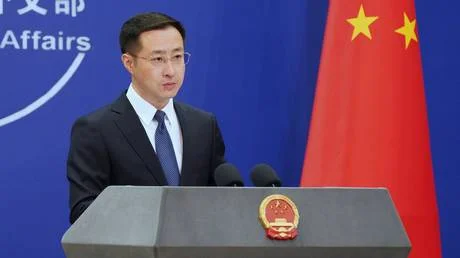
Chinese Foreign Ministry spokesperson Lin Jian condemned the legislation on Wednesday, emphasizing China's strong opposition to unilateral sanctions that lack international legal backing or UN Security Council approval. Lin warned that economic coercion and double standards applied by Washington would ultimately be counterproductive.
The updated sanctions bill, unveiled Tuesday, is a revision of an earlier proposal by the late Senator Lindsey Graham, a prominent critic of Russia who recently passed away. If passed, the measure would empower President Donald Trump to levy tariffs as high as 100% on goods imported from the top five importers of Russian oil and natural gas, including China and India.
This legislative move arrives less than two months after the US and China signed a trade framework aimed at reducing tariff tensions that escalated during the US-China trade war. During that conflict, the US imposed tariffs reaching 145% on Chinese goods, while China retaliated with duties up to 125% on American products.
Moreover, Beijing had restricted exports of rare earth minerals essential to US high-tech and defense sectors, causing supply chain disruptions and forcing some US manufacturers to halt production.
Why this matters
This development highlights ongoing trade and geopolitical tensions between the US and China, particularly concerning energy supply chains and economic sanctions. The proposed tariffs could further strain relations just as both nations attempt to ease prior trade conflicts.
China's firm stance against these sanctions signals potential challenges ahead in international efforts to pressure Russia over its geopolitical actions, complicating global energy markets and diplomatic negotiations.
In summary, China's response to the US Senate's proposed tariffs underscores a continuing clash over trade policies and sanctions, with significant implications for global energy trade and international relations.